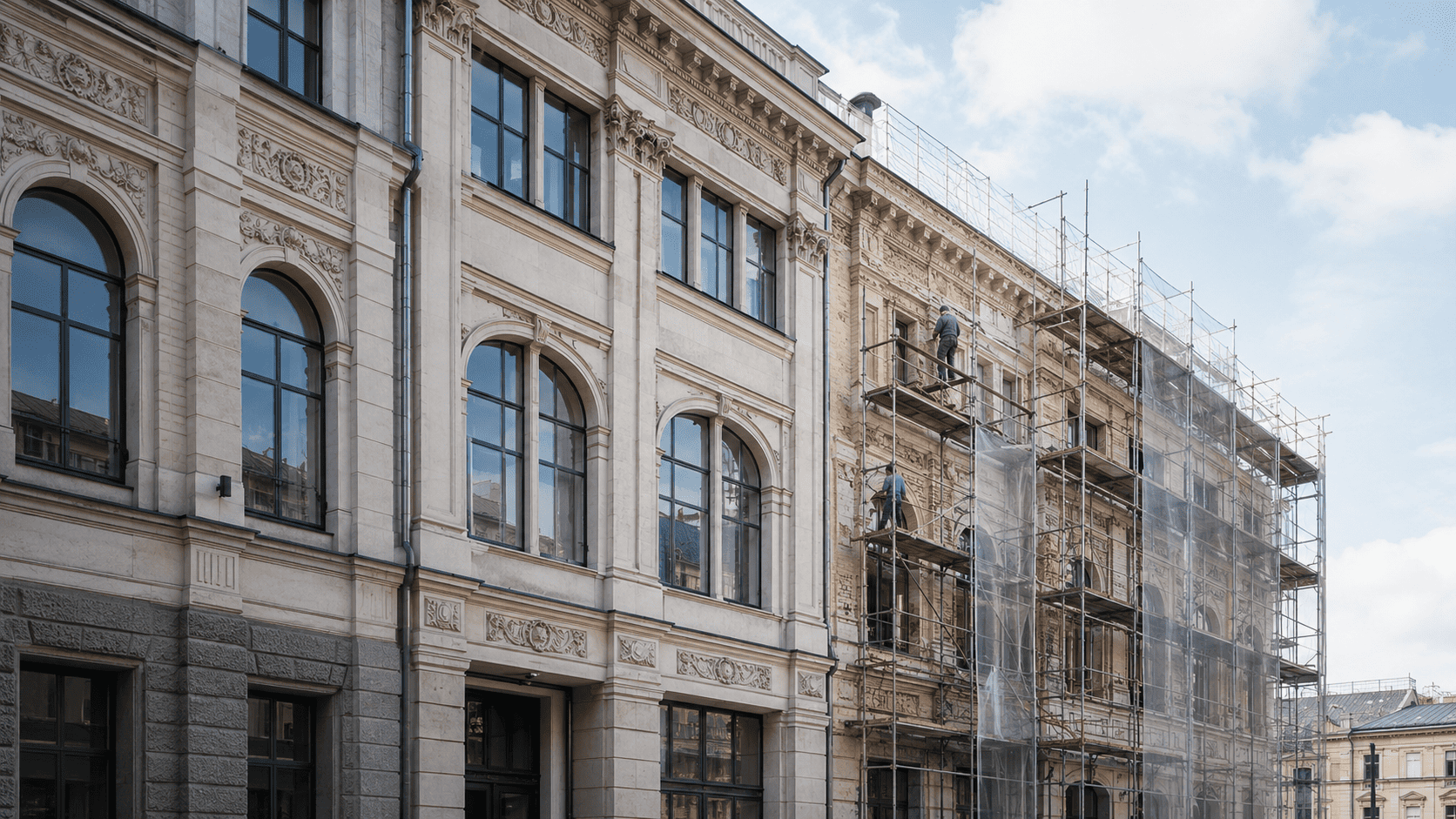
Features of building restoration
A set of survey, design, and construction and restoration solutions aimed at preserving the architectural value of the facility, restoring structural reliability, and adapting the building to modern operational requirements.
Full cycle of restoration and reconstruction
From technical inspection and design study to approvals, restoration work, renovation of engineering systems and commissioning of the facility - under unified control to preserve the value of the building without unnecessary risks and unforeseen costs.
Restoration of buildings is a sought—after area in modern construction, but it is fraught with special challenges. Lenox LLC knows how to overcome them. What is important for the owner:
• Preserve the value of the object: architectural and historical features must be carefully restored.
• To bring the building in line with modern standards: to ensure safety, energy efficiency, modern engineering systems and operational comfort.
Mistakes in restoration are especially critical:
• High cost of mistakes. Incorrect decisions on load-bearing structures lead to additional reinforcement costs, delays and budget overruns.
• Reputational risks. When working with historical buildings, any low-quality interference immediately catches the eye and can damage the image.
Our solution: a systematic approach of "analysis and design first, then implementation." Lenox LLC conducts a thorough analysis of the condition of the facility, the development of a detailed project taking into account all requirements, and quality control at each stage of construction.
The result is a high—quality restoration on time and within budget, while preserving the historical value and bringing the facility to modern standards.
What does building restoration include in modern construction
Restoration of buildings is a complex of works aimed at restoring an object, its structural reliability, functionality and architectural appearance. Unlike conventional repairs, it is important not only to update the elements, but to preserve the character of the building and correctly integrate modern solutions.
As a rule, the process includes an inspection of the technical condition, engineering diagnostics, development of design documentation, approvals, reinforcement of structures, restoration of facades and decorative elements, updating of engineering networks, as well as finishing and preparation for operation. Thus, restoration is both an engineering, architectural and organizational task.
Reconstruction and restoration: what is the difference and why is it important
These terms are often used together, but they have different meanings. The restoration focuses on preserving the authentic characteristics of the object: appearance, style, and unique details. The main purpose of which is to return the object to its original appearance, characteristic of a certain historical period. At the same time, traditional materials and technologies are used, and any interference is sought to minimize so as not to damage the authentic elements. Reconstruction, on the contrary, allows for the restructuring and adaptation of internal solutions in order to adapt the building to new functions and modern loads.
In practice, these two approaches are often combined. For example, during restoration, facades and historical elements are carefully restored, preserving their original appearance. At the same time, the internal systems and functional areas are undergoing reconstruction to meet modern operational requirements. This allows you to preserve the cultural and historical value of the object, while adapting it to modern conditions of use. Thus, a competent contractor should be able to find a balance between preserving the historical heritage and the practical needs of modern building use. This allows you to create an object that not only retains its cultural significance, but also meets modern standards of safety, comfort and functionality.
Stages of work during the restoration of buildings
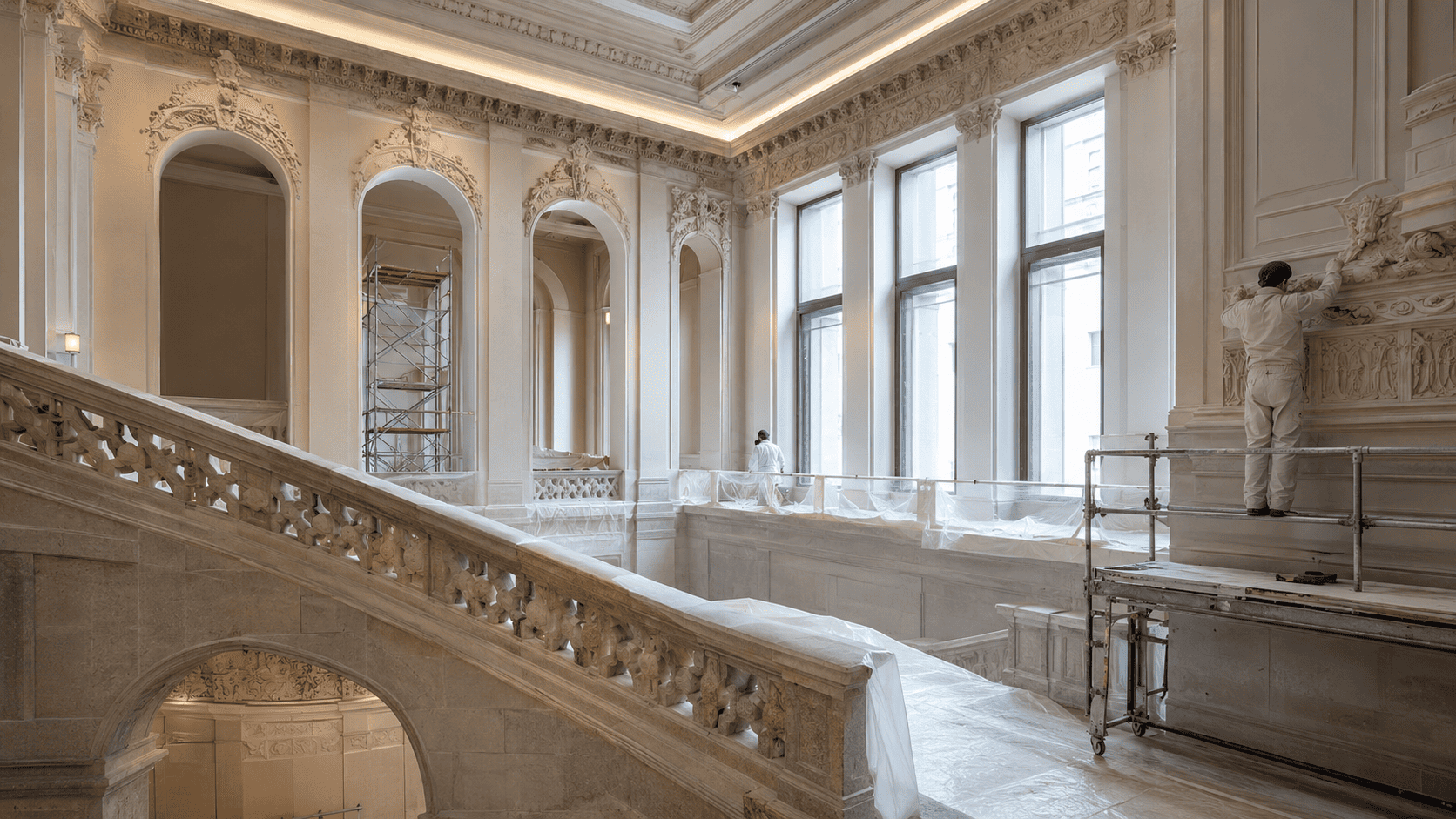
Stage 1 — Preliminary studies and assessment of the condition. At this stage, the history of the building is studied, visual and instrumental inspection is carried out, and laboratory analyses of materials are performed. Defects and the causes of their appearance are identified, and a report is prepared with recommendations for restoration.
Stage 2 — design and approval. They develop a restoration technique and select materials compatible with the original. They create project documentation and estimates, coordinate them with the customer, and for cultural heritage sites — with the monument protection authorities. When load-bearing structures are affected, they undergo state expertise.
Stage 3 — site preparation and organizational work. The construction site is being organized and communications are being brought in. Protective structures (scaffolding, shelters) are being installed, and non-historical or emergency elements are being dismantled. Surfaces are cleaned and biocidal treatment is carried out to prevent bio-contamination.
Stage 4 — construction and restoration work. Reinforcement of load-bearing structures (foundations / walls/floors), restoration of facades, repair of floors is carried out. They replace lost fragments, replace or repair engineering systems while preserving their historical appearance, and apply protective coatings.
Stage 5 — Final finishing and landscaping. They carry out finishing works, restore interior elements, beautify the surrounding area, install modern equipment that stylistically corresponds to the historical appearance of the building.
Stage 6 — Delivery of the facility and post-renovation monitoring. They draw up the executive documentation. A scientific and restoration report is prepared, and the object is handed over to the acceptance commission and the customer. They develop recommendations for operation and organize periodic inspections to prevent possible problems.
Important: only licensed organizations can perform work on cultural heritage sites (the license is issued by the Ministry of Culture of the Russian Federation). Construction and design supervision is required at all stages, and additional control by heritage protection authorities is required for monuments.
What are the most common risks in restoration projects
The first risk is the incompleteness or inaccuracy of the source data. At the start of the project, there may be a lack of reliable information about the structure of the building, its history, and previous repairs and alterations. Archival materials can be fragmented or lost, and visual inspection does not always reveal hidden defects. This leads to design errors and unforeseen work during the restoration.
The second risk is poor coordination of participants. During the restoration, designers, engineers, builders, finishing and approval specialists work simultaneously, so delays occur without a single management.
The third risk is difficulties in selecting authentic materials. To preserve the historical appearance, materials similar to the original ones are needed. They can be difficult to find, and production leads to increased costs. The use of modern analogues may violate authenticity or cause incompatibility with preserved elements.
The fourth risk is the gap between the project and the actual execution, when decisions are made on the site without taking into account the general engineering logic.
The fifth risk is a lack of qualified personnel. Restoration requires highly specialized specialists, who are few in the labor market. Low-skilled workers can lead to poor-quality work and the need for alterations.
These risks are interrelated: a single failure (for example, the discovery of a hidden defect) often triggers a chain of problems, from delays to budget increases. Therefore, successful restoration requires a thorough preliminary examination, flexible planning, clear interaction with the supervisory authorities and the involvement of experienced specialists.
Why does a single contractor simplify the implementation of restoration
When responsibility is distributed among multiple teams, the customer has to independently "stitch" processes and resolve conflict issues. In the single contractor format, this burden is removed: one team is responsible for coordination, quality, timing, and compliance with agreed decisions. As a result, the project is moving more steadily, and control is becoming more transparent.
How does engineering affect the timing and budget of restoration
In restoration, the budget and schedule directly depend on the quality of engineering training. If the nodes, technological sequences, and critical points are calculated in advance, the number of unexpected costs is noticeably reduced. Moreover, with regular monitoring, you can quickly adjust the plan, preventing the accumulation of delays.
Practice shows that competent engineering allows you to save money exactly where losses most often occur. These include supply logistics, replacement coordination, work order, quality control, and change management. Therefore, engineering support in restoration projects is not a formality, but the basis for the economic sustainability of the project.
Restoration of facades and structures: what they pay attention to first
The facade is the most visible part of the building, but you need to start not with decorative work, but with structural reliability. First, the condition of the load-bearing elements, floors, roofs and foundations is assessed. Only after that they proceed to the restoration of architectural details and finishing solutions.
In addition, it is important to consider the compatibility of new materials with old substrates. If selected incorrectly, cracks, peeling, and accelerated wear may occur. That is why facade restoration should rely on technical inspection and laboratory checks, not just visual assessment.
Renovation of engineering systems in historic and commercial buildings
Modern operation of the facility is impossible without reliable engineering networks. During reconstruction and restoration, electricity, ventilation, heating, water supply, security and automation systems are usually updated. At the same time, the task is complicated by the fact that new networks need to be integrated carefully, without violating the architectural appearance and structural limitations of the building.
Therefore, the project requires a balance between technical functionality and the requirements for the preservation of the facility. The more precisely the solutions are worked out at the design stage, the fewer interventions and alterations during the work process.
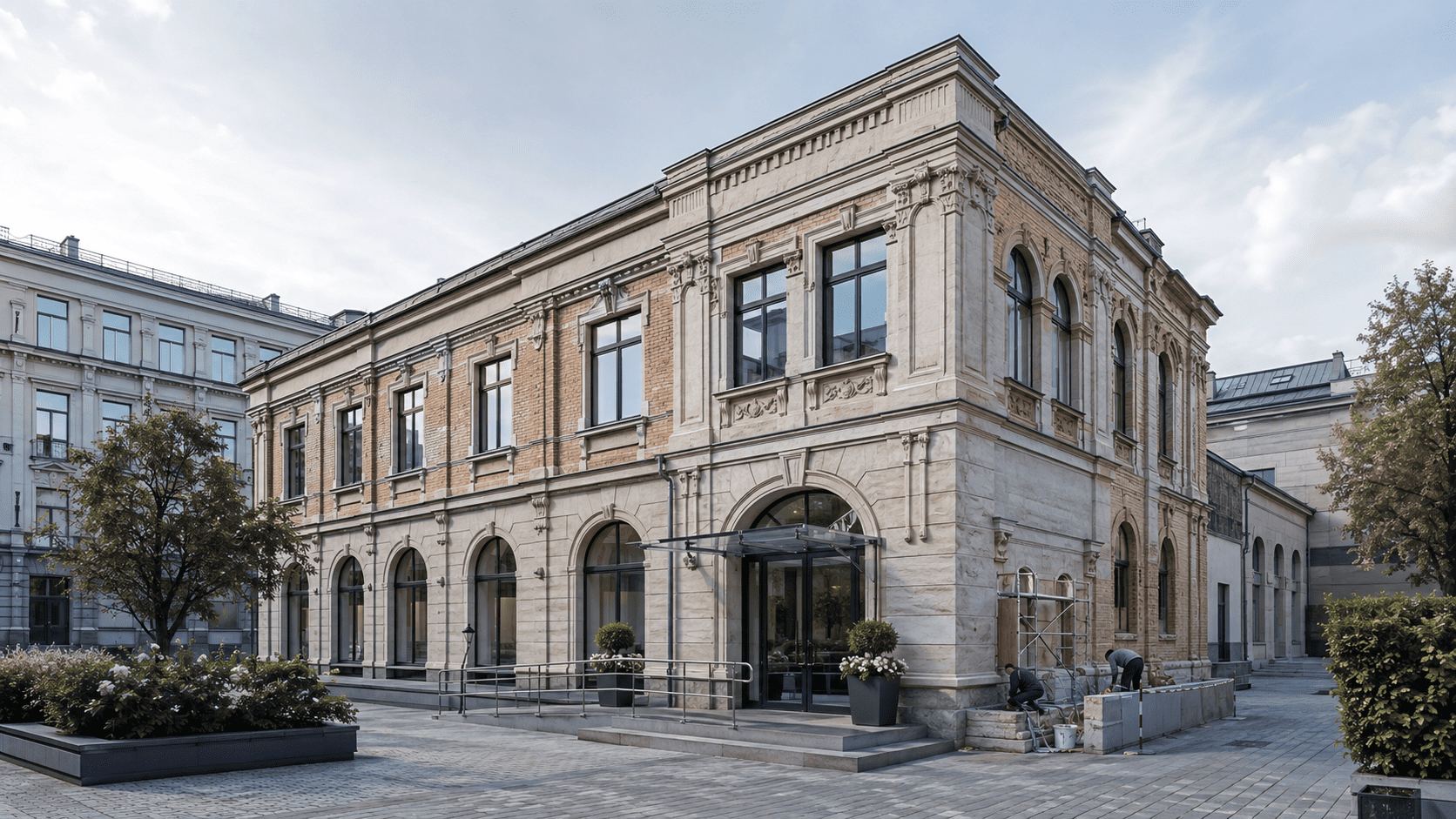
Lenox building reconstruction and restoration service
Lenox provides a service for the reconstruction and restoration of buildings with comprehensive project support: from technical assessment and design study to the organization of work, control of deadlines, budget and quality of execution.
How to choose a contractor for the restoration of a building
When choosing a contractor, it is important to evaluate not only the price, but also the ability of the team to run a complex project in a full cycle. First of all, they check the experience at comparable facilities, the availability of engineering expertise, and the practice of working with documentation and approvals. Next, they look at how transparently quality control is organized, how reporting is conducted, and how the contractor manages changes during the project.
It is also useful to clarify in advance who makes the key decisions on the site, how deviations are recorded and in what time frame corrective actions are implemented. This approach avoids situations where problems are discovered too late and require expensive alterations.
What determines the successful outcome of restoration and reconstruction
Restoration of buildings is a complex process, where it is important to preserve the value of the object and ensure its modern functionality at the same time. The success of the project depends on the quality of the survey, engineering study, precise coordination of work and strict control of execution at each stage.
That is why a comprehensive support model is the most rational for businesses and owners, where all key decisions are linked into a single management system. In this format, restoration and reconstruction are predictable: with clear deadlines, a controlled budget and a high-quality final result.
Related articles
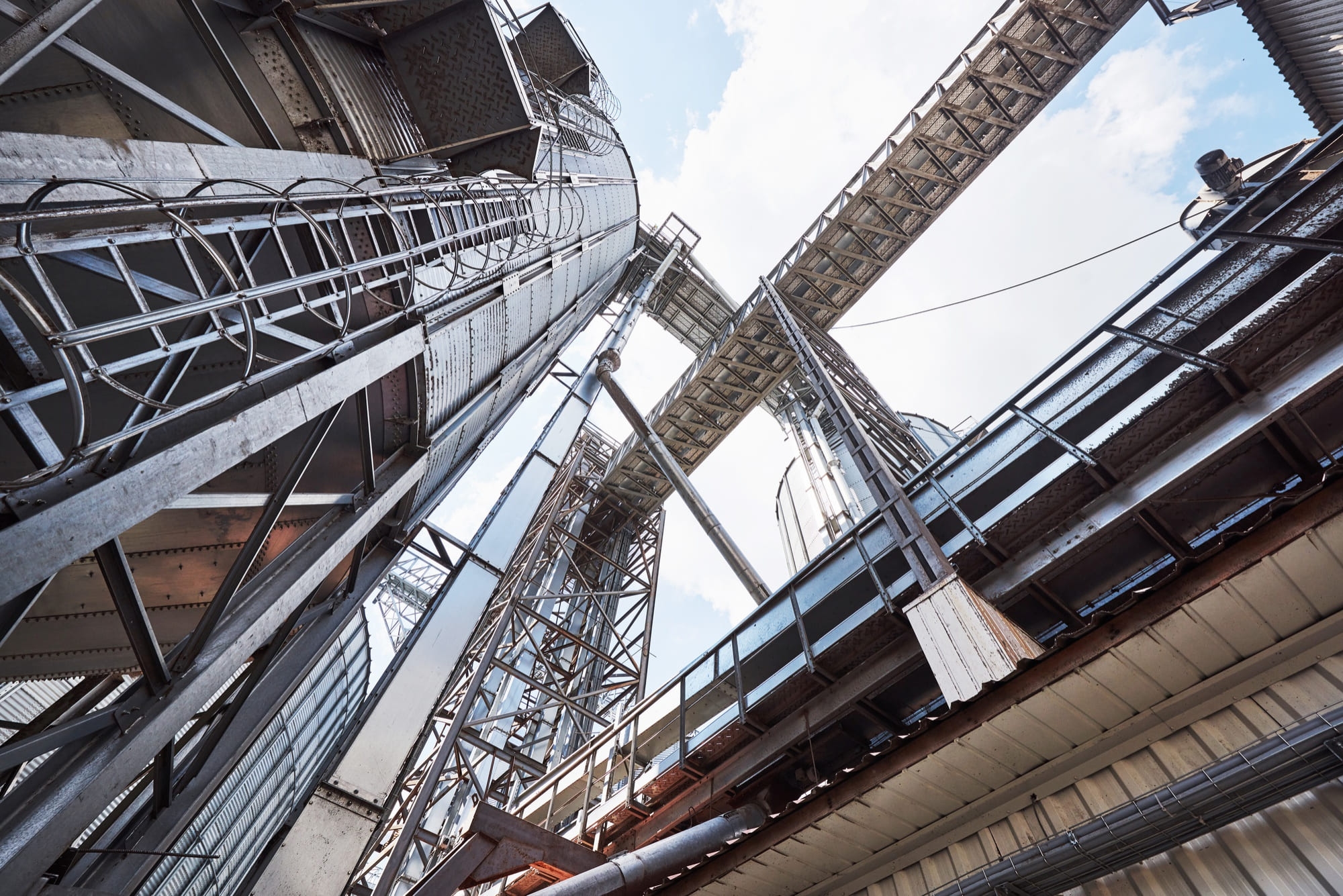
Construction of industrial buildings
A modern industrial building should ensure the uninterrupted operation of the enterprise, withstand production loads and create a reserve for further development. Competent design and professional implementation make it possible to obtain a reliable facility with predictable construction dates and a controlled budget.

Fit Out in Construction
The preparation of a commercial facility for opening requires high-quality coordination of all stages of the project. The Fit-Out approach helps to avoid deadlines, unnecessary costs and expensive alterations, ensuring that the premises are fully operational.
BIM technologies in construction
BIM technologies make it possible to effectively manage a construction project at all stages — from design to commissioning. A single digital model helps to control deadlines, budget and quality of work, identify collisions in a timely manner and reduce risks. This approach increases the transparency of project management, reduces the number of alterations and makes the implementation of the facility more predictable.