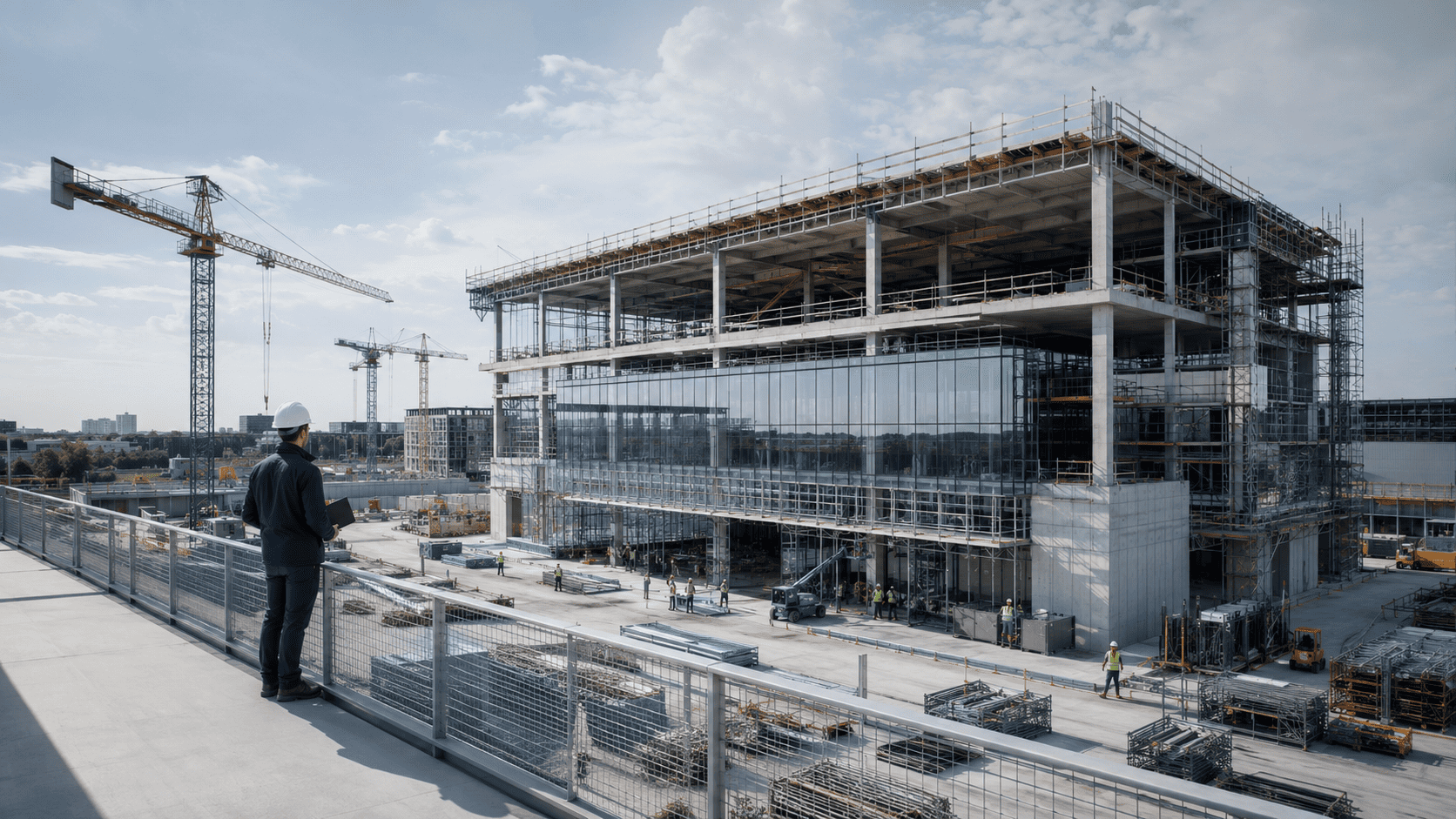
Unified Center of Responsibility
The general contractor combines the management of deadlines, budget, quality and contractors in one system, reducing risks for the customer at all stages of construction. This approach helps you make decisions faster, avoid conflicts between project participants, and maintain control over the outcome.
Full project implementation cycle
From pre—design preparation and planning to the organization of construction, documentation control and commissioning of the facility - under a single management for a predictable result. The customer receives transparent reporting, coordinated coordination of work and a clear picture of the progress of the project at each stage.
Today, a general contractor is not just a format for interaction in a construction site, but a full—fledged management model in which the customer receives a single center of responsibility for deadlines, budget and quality. At a time when projects are becoming more complex and the cost of error is rising, it is the general contractor who makes it possible to transform construction from a chaotic process into a transparent system with predictable results.
First of all, a general contractor is needed where pace, control, and risk minimization are important. The customer does not have to coordinate dozens of contractors, separately monitor supplies and resolve conflict zones between contractors. This task is taken over by the general contractor, which means that the business can focus on strategic goals: the launch of the facility, development and operational efficiency.
What is a general contractor in construction and why is it beneficial to the customer?
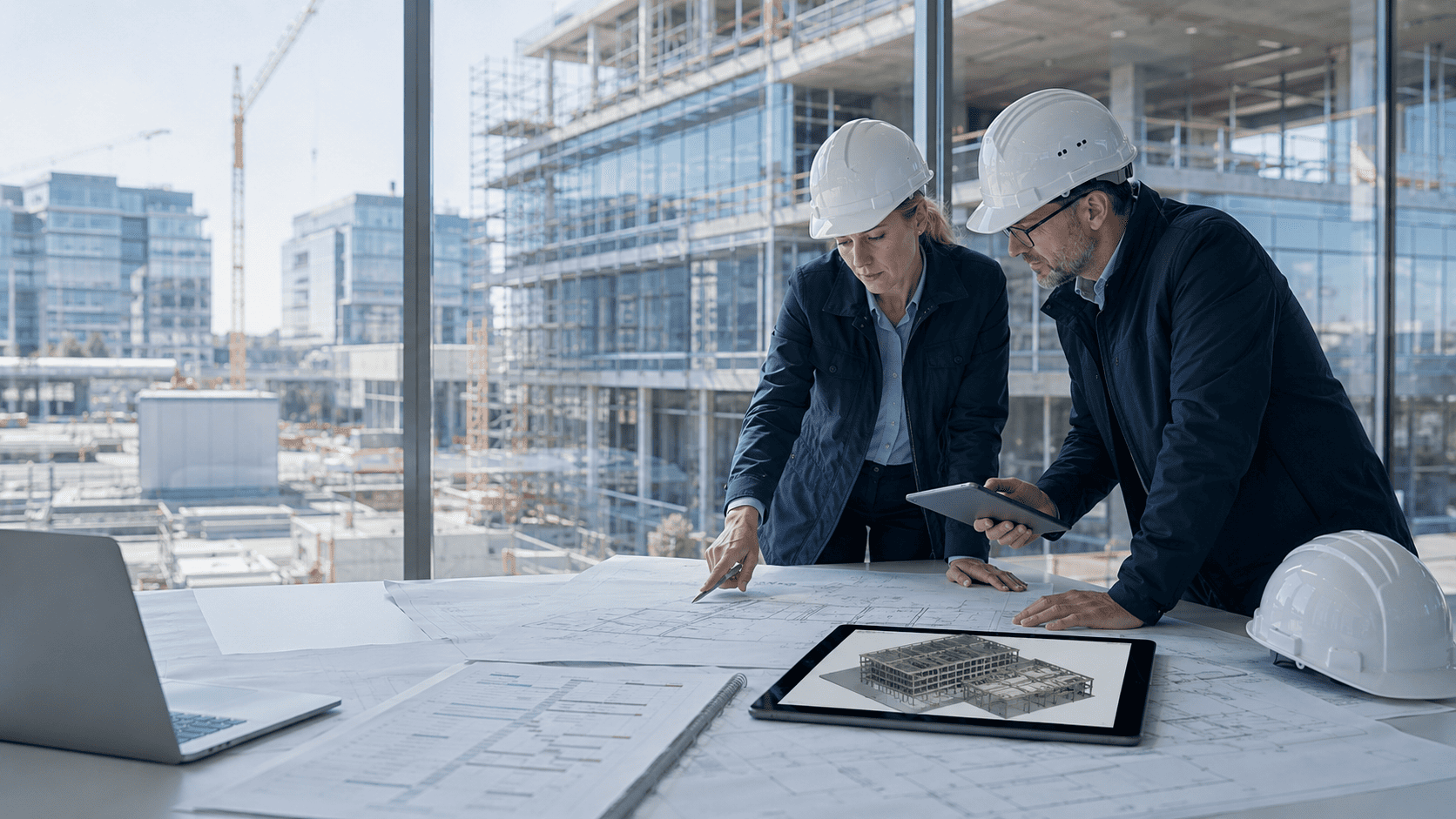
A general construction contract is a format in which one construction company is responsible for the organization and implementation of the entire project: from the preparation of documentation to the delivery of the object. In addition, the general contractor manages subcontractors, procurement, schedule, quality of work, and reporting to the customer.
On the one hand, the customer receives a clear project management structure and a single communication channel. On the other hand, the number of management errors that usually occur when individual teams and services coordinate independently is reduced. Thus, the general contractor reduces the administrative burden and increases the speed of decision-making on the site.
Key tasks of the general contractor at the facility
The general contractor performs several critical functions at once. First, it organizes the planning and management of the project: creates a roadmap, synchronizes the stages and allocates resources. Secondly, it monitors deadlines and budgets so that construction does not exceed the contractual targets. Thirdly, it ensures the quality of work through technical supervision, regulations and internal inspections.
Moreover, in a modern project, not only the construction itself is important, but also the correct workflow. That is why a strong general contractor accompanies the project documentation, acts, executive schemes and the final set of documents for the commissioning of the facility. As a result, the customer receives not only a completed building, but also a legally and technically correct result.
Stages of the general contract: from preparation to commissioning of the facility
The standard model includes several successive stages. First, pre-project preparation takes place: registration of the initial permit base, analysis of restrictions, initial planning and risk assessment. Then there is the project stage: selection of contract solutions, procurement strategy, detailed schedule and launch of the construction process.
This is followed by the construction stage, where quality control, safety, compliance with technology and daily monitoring of progress become key. Finally, the delivery of the object is completed: a set of documentation is formed, obligations are closed and the transfer of the object to the customer is organized. At the same time, a competent general contractor maintains transparent reporting at every stage so that the client has a complete management picture.
Where a general contractor is most often required
General contracting is most in demand where the cost of downtime and errors is high: business centers, administrative buildings, multifunctional complexes, production and infrastructure facilities. In particular, for commercial construction, it is important not just to build, but to put the facility into operation on time in order to start operation faster and get an economic effect.
In addition, the general contractor is especially relevant for projects with a large number of related work, where precise coordination of subcontractors is required. Accordingly, the more complex the facility, the higher the value of unified professional management.
Why unified responsibility speeds up the launch of a project
When there is one responsible contour in a project, the "gray areas" disappear, in which time and money are usually lost. The general contractor does not shift responsibility to third-party teams, but closes the management cycle completely. That is why decisions are made faster, deviations are fixed earlier, and corrective actions are implemented without delay.
How Lenox implements the general contracting service
LENOX focuses on an integrated approach: project planning and management, construction organization, interaction with the customer, regular reporting and delivery of the facility. Risk reduction, deadline control, budget control, and systematic document management are also emphasized. This approach corresponds to how a general contractor should work in business-class and corporate segment projects.
It is also important that LENOX emphasizes transparency of processes, compliance with norms and standards, the use of modern technologies and software, as well as budget optimization without loss of quality. For the customer, this means manageability of construction not in words, but at the level of daily practice.
Our company provides a general contracting service and undertakes full construction support: from planning and coordinating work to controlling deadlines, budget and quality at each stage of the project.
What does the customer get with the right general contracting model
The first is the predictability of deadlines. When the schedule is synchronized and controlled by a single team, the likelihood of cascading disruptions is noticeably lower. The second is financial manageability: the budget is controlled in conjunction with the actual volume and status of work. The third is quality, because control is conducted systematically, not sporadically.
The customer also receives regular reporting, clear statuses and transparent decisions on changes in the project. As a result, the general contractor turns construction into a measurable process, where each stage has criteria for the result. Finally, after completion of the work, the client receives a complete set of documentation, which is critical for the further operation of the facility and the legal purity of the project.

Mistakes when choosing a general contractor and how to avoid them
A common mistake is to choose at the lowest price without assessing managerial competence. Low cost at the start often turns into increased costs at the implementation stage. Therefore, it is important to check the team's experience, quality control system, planning approach, transparent reporting and real cases of completed facilities.
The second mistake is the weak fixation of responsibility in the contractual model. In practice, this leads to disputes over timing, volume, and quality. To avoid this, KPIs, the approval procedure, the workflow structure, and the mechanics of working with changes are determined in advance. Thus, the customer protects the project from managerial uncertainty.
The third mistake is the lack of regular monitoring. Even a strong contractor works more efficiently when the parties have agreed on a rhythm of meetings, reports, and checkpoints. Therefore, the management discipline should be integrated into the project from day one.
General contracting as a business growth tool
General contracting is a strategic decision for companies that need not just the fact of construction, but a predictable start—up time, a transparent budget and stable quality of work. At the same time, the customer receives a single management contour, reducing operational risks and speeding up project implementation.
That is why general contracting remains one of the most effective formats in modern construction of commercial and public facilities. If consistency, responsibility and results are important to you, switching to a professional general contracting model becomes a logical step for the successful implementation of the project.
Related articles

Construction of industrial buildings
A modern industrial building should ensure the uninterrupted operation of the enterprise, withstand production loads and create a reserve for further development. Competent design and professional implementation make it possible to obtain a reliable facility with predictable construction dates and a controlled budget.

Fit Out in Construction
The preparation of a commercial facility for opening requires high-quality coordination of all stages of the project. The Fit-Out approach helps to avoid deadlines, unnecessary costs and expensive alterations, ensuring that the premises are fully operational.

BIM technologies in construction
BIM technologies make it possible to effectively manage a construction project at all stages — from design to commissioning. A single digital model helps to control deadlines, budget and quality of work, identify collisions in a timely manner and reduce risks. This approach increases the transparency of project management, reduces the number of alterations and makes the implementation of the facility more predictable.